Why 2026 is disrupting home automation standards
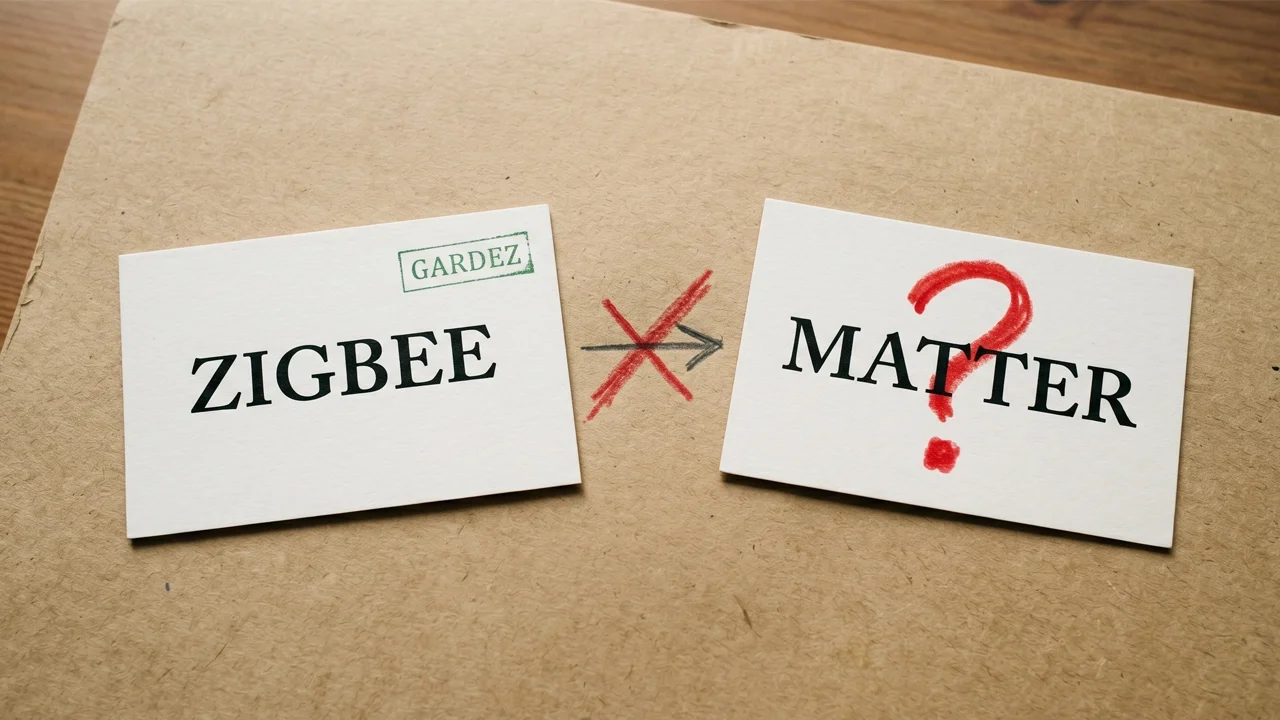
Some of you have been asking me this for months, and it keeps coming up regularly in the comments of videos: "Should I migrate my Zigbee installation to Matter? Should I drop Zigbee now that Thread is here?" The question is legitimate, because 2026 has really changed the game! Thread 1.4 became the only certified standard as of January 1st, Matter 1.5 rolled out with cameras and energy management, and meanwhile, Zigbee 4.0 was announced in November 2025. In short, the fog is lifting on what was yesterday still a complete mess.
Before going further, I want to make one thing clear: switching from Zigbee to Matter (Thread) is not an obvious technical decision, contrary to what the marketing communications of major players would have you believe. It's a choice that depends on your existing installation, your ecosystem, and above all your tolerance for complexity. And spoiler: my position on the hybrid approach is unambiguous, I'll give it to you further down.
In this article, we'll first clarify the Matter/Thread confusion (because it's massive, even among advanced users), then lay out what each protocol does better than the other in April 2026, and finally I'll give you a clear recommendation based on your profile.
Matter and Thread: the end of a major confusion
It's probably the most widespread confusion in mainstream home automation, and even many specialized blogs perpetuate it by talking about "Matter/Thread" as if it were one thing. It's not. Understanding the difference is absolutely fundamental before any purchasing decision.
Matter is the common language
Matter is what we call an application-level standard. Concretely, it's the vocabulary that your smart home devices speak. When your light bulb receives the command "turn on at 30% in warm white," it's Matter rules that define how this instruction is formulated and interpreted. It's the equivalent of French or English between humans: whether you speak by phone, video call, or in person, it's the language that enables understanding.
Matter was designed to tear down the walls between Apple Home, Google Home, Alexa, and SmartThings. A Matter-certified bulb works with all four, without proprietary bridge, without specific cloud. It's the promise of interoperability finally delivered, after ten years of walled gardens.
Thread is the road on which Matter travels
Thread is something entirely different: it's a low-power mesh network protocol, designed specifically for connected objects. If Matter is the language, Thread is the telephone: it's through it that the conversation passes physically. But a telephone alone is useless if the person on the other end doesn't speak your language. And conversely, you can have the same conversation by phone, video call, or in person: it's the same language, just a different channel.
And that's exactly how it works in home automation: Matter can run on your regular network (Wi-Fi or Ethernet) or on Thread. Two families of channels, one language. A Matter camera will typically go through Wi-Fi (because video requires bandwidth), while a battery-powered temperature sensor will choose Thread (because it's ultra-efficient).
When we talk about "switching to Matter," we're really talking about, in 90% of cases, switching to Matter over Thread, because that's the combination that truly replaces Zigbee for low-power sensors and accessories. Wi-Fi Matter bulbs are just a protocol reshuffle—you keep Wi-Fi's flaws (2.4 GHz saturation, power consumption, latency).
Why 2026 really changes the game
If I'd written this article for you in 2024, my answer would have been much more cautious. In April 2026, several barriers have just been lifted in rapid succession, and that's what makes the question pertinent now.
Thread 1.4, or the end of the parallel mesh nightmare
Before Thread 1.4, every manufacturer created its own Thread mesh. You had an Apple TV? It created its own Thread network. You added an Echo Hub? It created its own Thread network. A Nest Hub? Same thing. Result: three parallel Thread meshes in the same house, that didn't communicate with each other, and a sensor that could only join one of the three. A nightmare...
Thread 1.4 introduced credential sharing. When a new Thread 1.4 Border Router comes into your home, it joins the existing mesh instead of creating a new one. And since January 1st, 2026, it became the only version certified for new products. Concretely: any device released since the start of the year is supposed to work together, and the migration of existing platforms (Apple, Google, Amazon, Samsung) is underway. At the time of writing this article (April 2026), Apple is furthest along in deployment, SmartThings following very closely, while Google and Amazon are still lagging a bit.
Matter 1.5: cameras, energy, and an ecosystem that's maturing
Matter 1.5, released November 18th, 2025, is the most substantial release since 1.0. It finally brings native support for cameras (with WebRTC, pan-tilt-zoom, detection zones), a unified category for shutters/doors/garages, ground sensors for the garden, and above all real energy management with dynamic pricing. It's the version that takes Matter from "bulbs and plugs" to "complete ecosystem."
On the product ecosystem side, we're looking at around 750 to 1,100 Matter products identified in early 2026 depending on sources. It's still a fraction of the Zigbee offering (over 3,500 certified products), but growth is rapid. IKEA is pushing hard with Matter products under 10 euros, Aqara is announcing its first Matter camera for S1 2026, and even Philips Hue finally opened its bridge to Matter.
But watch out: Zigbee is far from dead
This is the point that many articles forget to mention. While Matter is taking off, Zigbee 4.0 was officially released in November 2025, and the SUZI certification program (Sub-GHz Zigbee at 800 MHz for Europe) is opening in the first half of 2026. If you missed this announcement, I wrote a dedicated article that I recommend reading before any major purchase decision: Zigbee 4.0: what's new, long range and hardware compatibility.
The key takeaway: Zigbee 4.0 comes to directly challenge Z-Wave Long Range with sub-GHz, maintains full backward compatibility with Zigbee 3.0 (reassuring for your existing installations), and adds direct pairing via Bluetooth (Zigbee Direct, now mandatory). In short, the protocol we were burying two years ago just reinvented itself.
Strengths and weaknesses in the field, in April 2026
Now that we've put everyone back in their lane, let's talk concrete. What does Matter/Thread really do better than Zigbee today, and where does Zigbee still have an edge?
What Matter over Thread does better
First, portability between ecosystems. This is the argument most pushed by official communications, but let's be honest: for most of you running Home Assistant (or equivalent), this argument largely falls flat. HA has been making Zigbee, Z-Wave, Wi-Fi, Matter and company coexist for years, and can expose all of it uniformly to Apple Home, Google Home or Alexa. You already have interoperability, without waiting for Matter. On the other hand, for the general public without advanced smart home solutions, who just want a bulb bought from IKEA to work with their iPhone and another household member's Google Home without fiddling around, there, Matter is genuinely a godsend.
Next, the simplicity of pairing. The Matter QR code is honestly more efficient than classic Zigbee manipulations (three long presses, wait thirty seconds, launch pairing on the hub side, pray...). For a beginner, it's real progress, and even for a seasoned HA user, it saves time.
Finally, Thread latency is excellent, often better than Zigbee. And native IPv6 means each device is directly addressable, without a central coordinator acting as a bottleneck. On a large installation with many devices, that's a real architectural advantage.
What Zigbee still does better
And this is where it stings. On battery autonomy, Zigbee maintains a significant lead. Aqara advertises three years for its FP300 sensor in Zigbee, versus two years for the same sensor in Thread. Why? Because Zigbee has twenty years of optimizations under its belt, ultra-aggressive sleep cycles, and doesn't drag the overhead of IPv6.
On the reliability of groups, Matter suffers from what's called the "popcorn effect": when you turn on a group of 6 bulbs, they light up in sequence with visible stagger, whereas with Philips Hue in native Zigbee, it's perfect simultaneous lighting. Matter's Scene cluster is still rarely adopted by major ecosystems, and some platforms prefer to manage scenes on the cloud side, which completely breaks local-first.
And then there's product maturity, plain and simple. Over 3,500 Zigbee certified products versus around 1,000 Matter—that's a huge difference when you're looking for a specific water leak sensor, a programmable button, or a cheap blind module.
Finally, a forward-looking argument that weighs heavily: with Zigbee 4.0 and the SUZI brand, sub-GHz is arriving at Zigbee starting in the second half of 2026. Concretely, you'll gain native range on 800 MHz frequencies (Europe) that will make what Thread offers today on 2.4 GHz look ridiculous, perfect for covering a large garden, outbuildings, or a workshop without multiplying repeaters. On the Matter/Thread side, a possible Sub-GHz Thread is discussed in Alliance discussions, but with no public roadmap in April 2026. If you're investing in your installation for five or ten years, this differential matters seriously.
The concrete pitfalls of Matter/Thread that nobody mentions
Let's be honest: switching to Matter over Thread isn't plug-and-play like they try to sell you. Several things can make life difficult.
First, your Wi-Fi must properly handle IPv6 multicast. Many ISP routers and Wi-Fi mesh systems aggressively filter multicast, which completely breaks Matter commissioning and communication between Border Routers. If you're still on an ISP box, prepare yourself for headaches.
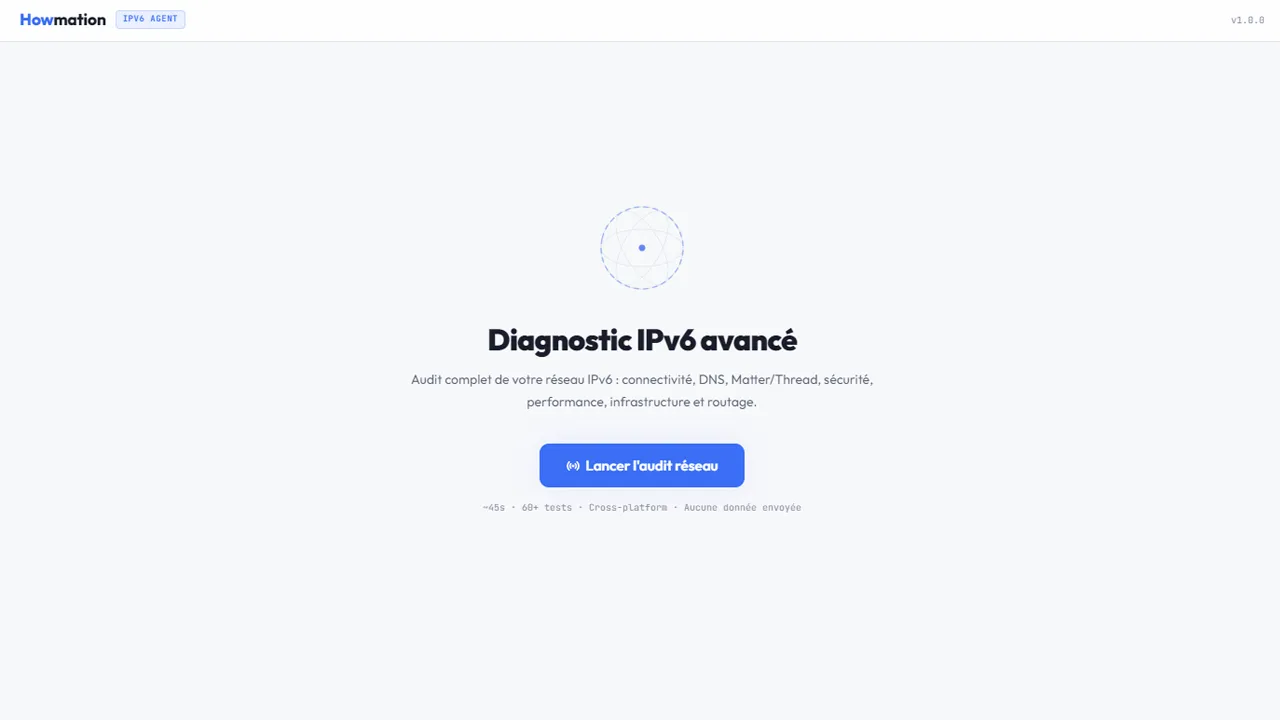
And to save you from spending three evenings diagnosing whether the problem comes from your network or the device itself, I've prepared a little Windows utility that tests in just a few clicks whether your setup is IPv6 compatible and therefore ready for Matter/Thread. It's free, portable (no installation), and will save you plenty of headaches: download Howmation IPv6 Agent.
 Next, implementation remains fragmented. No platform implements the complete Matter spec in April 2026. SmartThings is the most up-to-date, Apple the most polished, Google and Amazon have holes in their coverage. Concretely, you buy a Matter product that supports generic buttons, and discover that Google Home doesn't expose them in its app.
Finally, don't confuse a Thread device with a Matter device. Many Thread products only support HomeKit and don't have Matter support. The Matter logo on the box isn't optional, it's your only guarantee of interoperability.
Why I advise against the hybrid approach
Here's the most important point in this article, and where I'm going to depart from the wishy-washy consensus you'll read elsewhere. Making Zigbee and Matter over Thread coexist in the same home is not a good long-term idea, and the argument is purely technical.
Both Zigbee and Thread are mesh networks. And the robustness of a mesh network depends directly on the number of mains-powered devices that can play the role of router/relay. The more wall outlets, embedded modules, and always-on bulbs you have in your home, the more resilient the mesh is: if one path is cut (interference, device crash, thick wall), another takes over.
When you split your installation across two different mesh protocols, you mechanically divide the number of relays available for each mesh. Your six Philips Hue Zigbee bulbs strengthen only your Zigbee mesh. Your eight IKEA Matter plugs over Thread strengthen only your Thread mesh. Neither benefits from the other. You're paying twice for the same infrastructure, and each of the two is more fragile than if you'd consolidated everything on a single protocol.
That's why I recommend choosing a camp and sticking with it, rather than mixing to "not deprive yourself." The mixing is precisely what makes your installation less reliable in daily use.
How to choose: my recommendation by profile
No universal answer, so here's how I'd decide based on your situation today.
You're starting from scratch in 2026
Interesting question, because that's where the choice is most open. If you're 100% Apple Home or Google Home and want simplicity above all, go with Matter over Thread. Buy an Apple TV 4K or HomePod mini as a Border Router (you probably already have one), and you're off. The learning curve is gentle, and you'll benefit from ecosystem growth.
On the other hand, if you plan to use Home Assistant and want maximum richness in terms of available products, I still recommend Zigbee to you today, ideally with a recent coordinator capable of evolving. You'll keep access to 3,500+ products on the market, and the day Zigbee 4.0 matures, you can add a SUZI coordinator alongside for long range.
You already have a solid Zigbee installation
You keep everything. Don't touch anything. Migrating a working Zigbee installation to Matter in 2026 makes absolutely no technical sense. You're going to lose time, products, and probably battery autonomy for virtually zero daily gain. For your next purchases, stick with Zigbee as long as your coordinator holds up, and watch Zigbee 4.0 when the first SUZI products come out in S2 2026.
You're on Home Assistant and curious about both
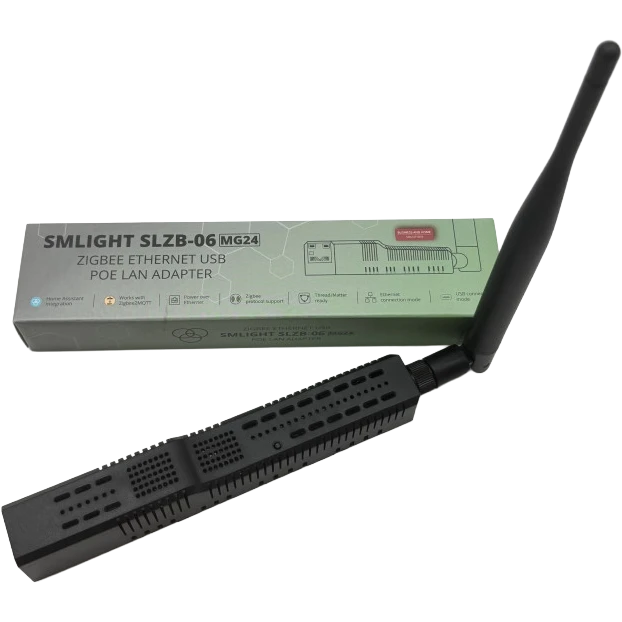
Here, my advice is going to be counter-intuitive given everything I just said. If you're an advanced Home Assistant user and know what you're doing, you can have both a Zigbee coordinator and a Thread Border Router (the Home Assistant ZBT-2 or a SLZB-06 allow this). But, and this is crucial, treat each network as a separate installation, and don't try to fill both of them. Put all your main sensors on one of the two, and use the other only for rare exclusive products. You avoid the pitfall of the divided mesh.
Conclusion: should you switch from Zigbee to Matter (Thread) in 2026?
My straightforward answer: no, not in April 2026, unless you're starting from scratch and your ecosystem is dominated by Apple or Google. For anyone who already has a working Zigbee installation, migration is not justified. You'd lose product maturity, battery autonomy, fluidity on lighting groups, and you'd essentially gain portability between ecosystems, an advantage that doesn't help much if you're already set up on a single platform.
My preference clearly goes to a cycle-based approach rather than a brutal migration. For the next five years, keep your Zigbee, watch Matter over Thread mature, and prepare yourself for a possible shift to Zigbee 4.0 (with SUZI for long range) or to Matter over Thread when the ecosystem is truly at the level of what Zigbee has offered for twenty years. You have the time, don't let marketing pressure you.
To wrap up, I'm going to share with you a reflex that every SRE (Site Reliability Engineer) knows by heart. It's the job of those who work day and night to ensure that Netflix, Google, or your online bank services never go down. The golden rule of this profession is never to deploy a new version of software or protocol to production on its release day. You wait for the first users to get the bugs out, for critical bugs to be reported and fixed, for a stable version to emerge—generally six months to a year later. The maxim in the profession is simple: don't play with production. Your home is exactly the same thing. It's your production. When your alarm, lighting, heating, and shutters depend on it daily, that's not the time to test the latest version of a protocol that's still finding itself.
And above all, don't go tinkering with a hybrid setup thinking you're getting the best of both worlds. You'll just divide the robustness of each of the two meshes. Pick a protocol, be rigorous in its deployment, and concentrate all your infrastructure on it. It's less cool than a multi-protocol setup to show off on Instagram stories, but it's what holds up over time.